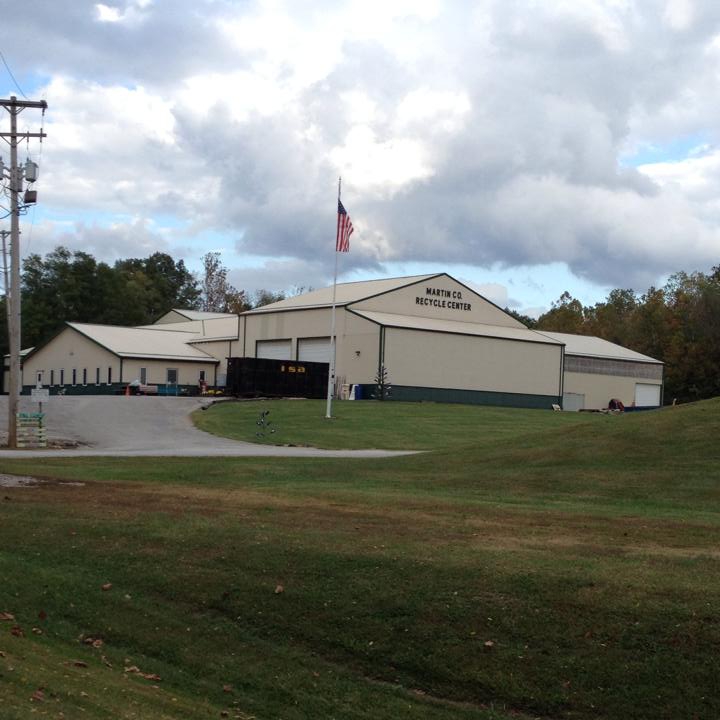
Martin County’s Recycling Center Faces December Hearing as Finances Stay Thin
 Terry Dailee
Contributor
The Martin County Recycling Center has operated for years as the place people take cardboard, cans, paper, and the occasional load of household junk. Next month the Solid Waste Management District board will hold a public hearing to decide how, or whether, that service continues in anything like its current form. The hearing is set for December 10 at 6 p.m. at the center, 500 Industrial Park Drive in Loogootee.
What the numbers say right now
The district is carrying roughly $23,000 in unpaid payroll taxes dating back to May and an outstanding $13,000 bill to Premiere Energy for bulk fuel. Weekly payments have not kept pace with diesel prices. About 100 residents use the facility regularly. In response the board already closed the center on Tuesdays, cut some employee hours, and put a $20 pickup fee on commercial cardboard service that had been free. Semi-trailer exchange fees doubled. Those steps slow the bleeding; they do not close the gap.
Perry Township Trustee Jason Hennette attended a recent board meeting after the center asked for help. State Board of Accounts guidance was clear: one governmental unit cannot simply transfer money to another to cover the shortfall. That leaves the December hearing as the place where the board and the public look at longer-term options.
How the program got here
Martin County’s Solid Waste Management District has run the recycling center for decades. In earlier years the operation processed large volumes — one report from around 2010 put annual intake above seven million pounds — and sold material on the open market. When commodity prices were strong the district reduced its property-tax levy, at one point dropping it from 25 cents to 4 cents. Later the funding model shifted toward an asset fee on dwellings (roughly $24 a year) rather than a broader tax levy. The center also accepted material from businesses and, at times, from neighboring counties without charging them at the gate, making its money on the back end when it sold the recyclables.
Those conditions have changed. Markets for mixed paper, glass, and some plastics have been weak for years. Fuel, labor, and insurance costs have not. Board discussions in 2024 already noted past-due bills, insurance obligations, and the fact that taking in trash and certain materials was more expensive than the revenue it produced. The center still runs spring and fall cleanups (and occasional summer ones) where residents can bring loads for a fee scaled by truck or trailer size, and it still buys aluminum cans. Those events help, but they do not fund daily operations.
The district’s stated purpose has always been practical: education on waste reduction, a place to drop recyclables, and a way to keep material out of the woods and roadside ditches. There is no county landfill. The center has been the main outlet.
How the neighbors handle it
Neighboring counties are not all in the same position.
Greene County’s Solid Waste Management District, organized in 1990, runs two recycling centers (Linton and Switz City). Hours vary by site; the Switz City location is open Tuesday through Saturday. The district sets fees by resolution and has adjusted them when costs rise. Residents pay a modest annual user fee for the recycling service; out-of-county material is either restricted or charged more.
Daviess County operates a landfill with a tipping fee (currently $25.60 per ton) and keeps limited recycling containers on site for plastics, aluminum, steel cans, newspaper, and cardboard. It also runs a “Trash for Cash” program that pays nonprofits to clean roadside litter. The landfill is closed to out-of-county trash. Recycling is secondary to disposal capacity.
Orange County’s district has been active with site improvements, tire-recycling grants from IDEM, and regular board meetings. It contracts for some services and has completed building and electrical work at drop-off locations.
Martin County’s program is smaller and more exposed. It has relied on commodity sales and a relatively light residential fee structure. When markets soften and fuel rises, there is little cushion. The roughly 100 regular users are not enough volume to cover fixed costs the way a larger district’s multiple sites or a landfill’s tipping fees can. Commercial cardboard service that was free is now fee-based; neighbors that still offer free or low-cost drop-off for the same materials are in a stronger position to keep those hours open.
What the hearing can actually decide
The December 10 hearing is the formal chance for residents to hear the current figures and speak to options. Possible paths that have come up in prior board discussions include:
- Returning to a higher tax levy or adjusting the asset fee so more of the cost is covered by property owners rather than commodity sales alone.
- Further reducing hours or eliminating certain services (glass has already been described as a low-return hassle in past meetings).
- Raising fees on cleanups, commercial pickups, or out-of-county loads.
- Exploring partnerships or shared services with neighboring districts, though state accounting rules limit simple transfers.
- Continuing on the current reduced schedule and hoping commodity prices improve — the least certain option.
The center’s phone is 812-295-4142. The Shoals drop-off site still operates limited Saturday hours. Anyone who has an opinion on whether the program is worth the next round of funding, and in what form, has a date on the calendar.
```
No thoughts yet — be the first.