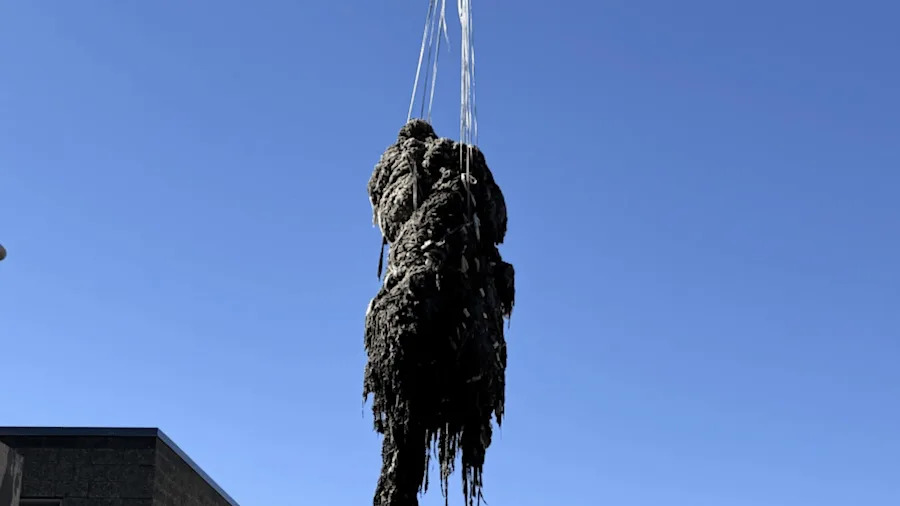
Neighboring Daviess County Pulls a Giant Wipe Clog From the Sewer Plant
 Bob Taylor
Contributor
Just across the river in Daviess County, Kentucky, the Regional Water Resource Agency (RWRA) recently hauled a large, tangled mass of wet wipes and other debris out of the main incoming line at its sewer plant. The picture that went around local news looks about the way you’d expect: a dark, ropey clump hanging from cables, the kind of thing that makes you rethink every “flushable” label you’ve ever trusted.
The agency said the blockage came from people flushing things that are not waste or toilet paper. Large clogs like this lead to costly repairs, backups, and the occasional wastewater overflow. RWRA’s plain advice is the same one wastewater people have been giving for years: only flush what the system was built for. Everything else belongs in the trash.
How it builds up
This is not a brand-new surprise for the Owensboro-area plant. Back in 2022, RWRA reported a similar wipe blockage that cost nearly $5,000 in equipment and labor. At the time, their environmental compliance director noted that so-called flushable wipes do not break down the way toilet paper does. They stretch, catch other solids, and keep growing. Maintenance crews were already getting called out regularly. Later that same year, an operations director said the calls were still coming every week and that the agency had started using cutter-style propellers on pumps just to keep the equipment turning.
There is no public report of a dramatic early warning specific to this latest pull — no sudden surge of customer complaints or a single event that tipped the scales. These problems usually accumulate quietly. Wipes snag on joints, roots, or rough spots in the line. Grease from kitchen drains coats them. Over time the mass gets heavy enough that screens or pumps start to labor, and crews eventually have to go in and dig the thing out by hand or with equipment. Nationally, the National Association of Clean Water Agencies has estimated that improperly disposed wipes cost U.S. utilities up to $1 billion a year. Most of that money is spent on the same cycle of clearing, repairing, and warning people again.
The practical side for our side of the line
Martin County readers will recognize the general problem even if our own systems have not made the evening news with a dangling wipe ball. Any place that runs a wastewater plant or relies on septic and laterals has the same weak point: material that does not dissolve. The marketing on the package says “flushable.” The physics in the pipe says otherwise. Toilet paper is engineered to fall apart in water. Most wipes are engineered to hold together long enough to do their job, which is exactly long enough to cause trouble once they leave the bowl.
The cheapest fix is still the old one. Use the wipes if you like them. Throw them in the trash when you are finished. Keep grease out of the drain. Those two habits do more to keep a line clear than any special screen or cutter blade the utility can install after the fact. The Daviess County plant is simply the latest place to show what happens when enough people decide the package knows better than the sewer.
No thoughts yet — be the first.